॥ हर हर महादेव ॥
The Naga Sadhus
Warrior Ascetics of the Eternal Dharma
Fearless. Ash-Smeared. Beyond the World.
Who Are the Naga Sadhus?
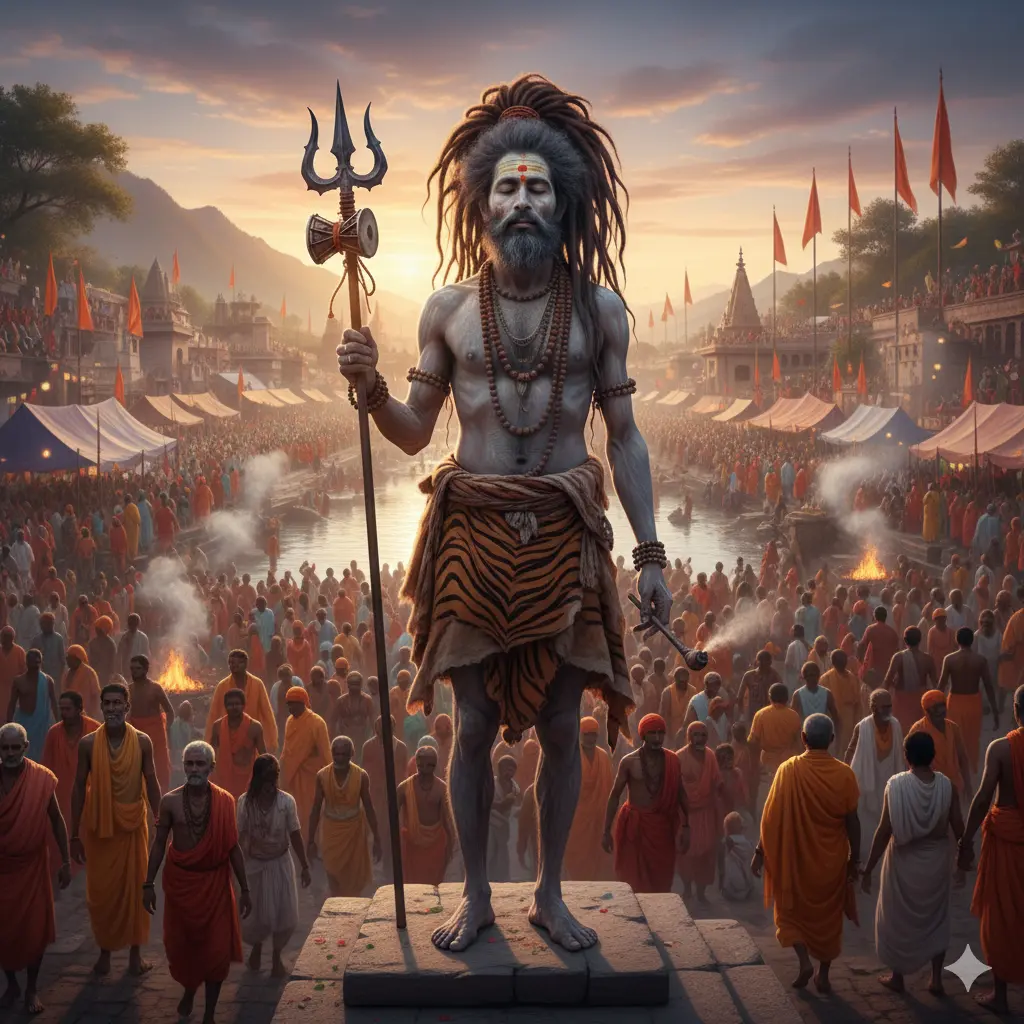
Naga Sadhus are an ancient order of Hindu warrior-monks who have given up all worldly attachments. They walk naked or nearly so, their bodies covered only in sacred ash (vibhuti), their matted hair (jata) piled high. They carry tridents, swords, and tongs. They answer to no one but the divine.
The word "Naga" means naked. It shows their total detachment from material life. They have performed their own funeral rites (death of the ego) and are considered living dead to the material world. At Kumbh Mela, they are the first to enter the sacred waters during the Shahi Snan, a right earned through centuries of spiritual discipline.
"They have burned away the ego. What remains is pure spirit."
History of the Naga Tradition
Adi Shankaracharya Founds the Akhadas
Around 788 CE, Adi Shankaracharya organized Hindu monks into military-style orders called Akhadas to protect Sanatan Dharma. He created the first Naga warrior-monk orders, training them in both spiritual practice and martial arts.
Defenders of Dharma
During the Mughal invasions, Naga Sadhus took up arms to protect Hindu temples, pilgrimage routes, and sacred sites. They fought real battles, defending Varanasi, Ayodhya, and other holy cities.
The Grand Kumbh Processions
Today, Naga Sadhus are the star attraction of every Kumbh Mela. Their Peshwai (grand entry) marks the official start of the festival. Thousands march through the streets on horses, elephants, and chariots.
Attire & Body Markings
Every mark on their body carries deep spiritual meaning
Matted Hair (Jata)
Their long, matted dreadlocks show their connection to Lord Shiva. They never cut their hair after initiation. Some pile it into a towering crown.
Trishul (Trident)
The trident of Lord Shiva. It represents the three aspects of consciousness and the power to destroy ignorance. Their primary weapon and spiritual symbol.
Rudraksha Beads
Sacred beads worn around the neck, wrists, and arms. Each bead is said to hold a tear of Lord Shiva. Used for meditation and chanting.
Sacred Ash (Vibhuti)
Their entire body is smeared with ash from sacred fires (dhuni). It represents the impermanence of the body and destruction of the ego.
Sacred Thread
A sacred thread worn across the chest, marking their initiation and commitment to spiritual life. It shows they are twice-born, reborn into the spiritual path.
Digambara (Sky-Clad)
Many Naga Sadhus wear no clothing at all. "Digambara" means clothed by the sky. The ultimate symbol of renunciation - they own nothing.
Orders of Naga Sadhus
Shaiva Naga Sadhus
Devoted to Lord Shiva
The largest and most well-known group. They worship Lord Shiva as the Supreme Being. Their Akhadas include Juna (the biggest), Mahanirvani, Atal, Avahan, Anand, Niranjani, and Agni. They smear their bodies with ash and carry the trishul.
Vaishnava Naga Sadhus
Devoted to Lord Vishnu
They worship Lord Vishnu and his avatars, especially Lord Rama. Their Akhadas include Digambar, Nirmohi, and Nirvani. Unlike Shaiva Nagas, they sometimes wear a single cloth and apply sandalwood tilak.
Udasin Naga Sadhus
Beyond Sectarian Lines
Founded by Sri Chandra, son of Guru Nanak. They don't belong to Shaiva or Vaishnava tradition. They follow a path of total indifference (udas) to the material world. Their Akhadas include Bada Udasin and Naya Udasin.
Their Role in Kumbh Mela
Peshwai (Grand Procession)
The Peshwai is the grand arrival of each Akhada into the Kumbh city. Naga Sadhus march with swords, tridents, and flags. They ride horses, elephants, and decorated chariots. It is the most spectacular event of the entire Kumbh.
Shahi Snan (Royal Bath)
On the most sacred bathing days, Naga Sadhus have the first right to bathe. Before sunrise, they march to the ghats, entering the water amid chanting, conch shells, and drums. Only after they finish can other pilgrims begin their holy dip.
Spiritual Authority
Naga Sadhus are among the highest spiritual authorities at Kumbh. Pilgrims seek their darshan (sacred sight) and blessings. Their camps become centers of teaching and initiation. New sadhus are initiated into the Naga order only during Kumbh Mela.
Witness the Grand Processions
See the full schedule of Akhada processions, Shahi Snan dates, and spiritual events at Nashik Kumbh 2027.
View Events & Akhadas